
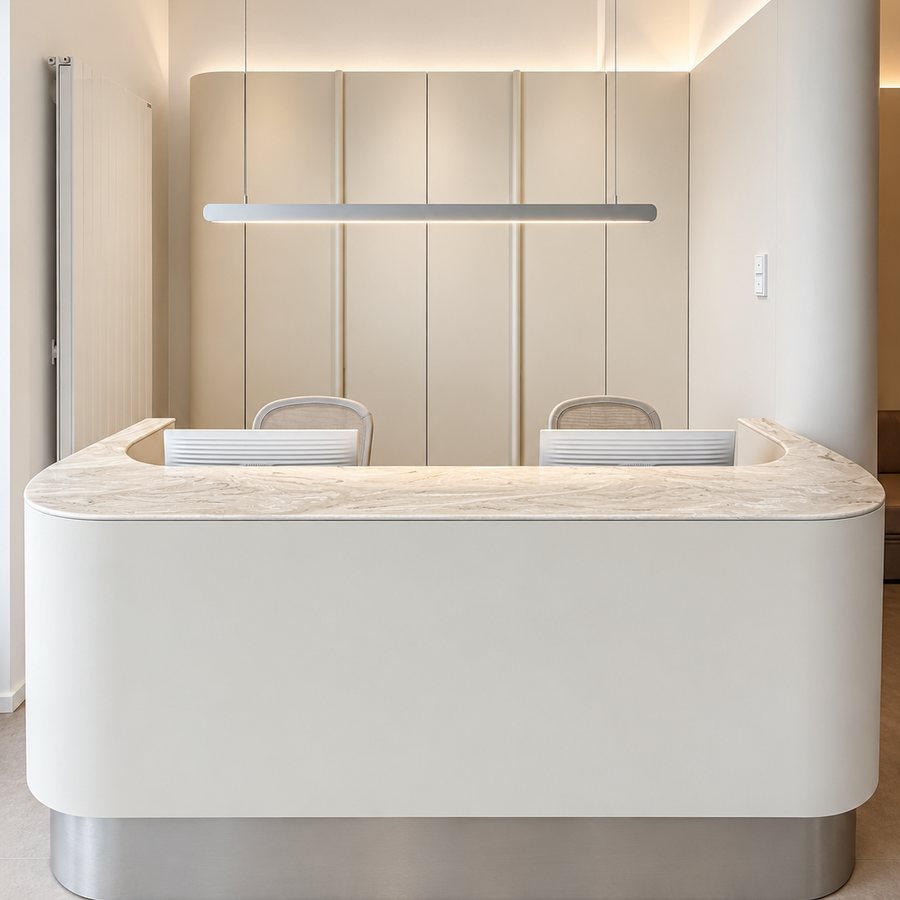
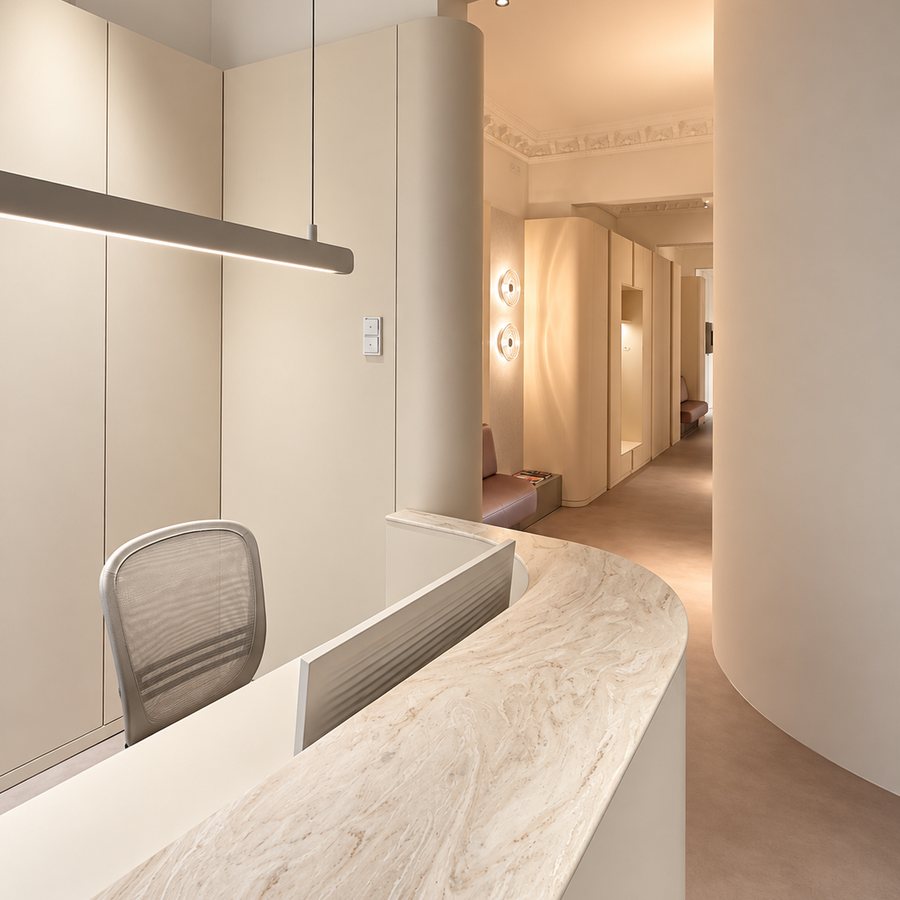
Everyone at our reception speaks English, and between us the team also speaks Bosnian, Romanian, Polish and Turkish. This page explains how dental care works in Germany – the part that is rarely explained to people who have just arrived.
For international patients
You will be understood
The first call usually decides whether a practice feels manageable. At our reception, English is spoken by everyone, so you can book, ask about costs or describe a problem without preparing sentences in advance.
Within the team, several further languages are spoken: Bosnian, Romanian, Polish and Turkish. If one of them is your first language, mention it when you book – we will try to arrange the appointment so that the colleague who speaks it is there.
Both dentists, Dr Verena Berger-Kahle and Dr Ina Jeltsch, explain treatments in English, including the written treatment and cost plan before larger work begins.
How dental care works in Germany
Two systems, not one. Germany distinguishes between statutory health insurance (gesetzliche Krankenversicherung) and private insurance. Statutory insurance covers a defined basic standard of dental care. Anything beyond that standard – higher-quality materials, treatment under the microscope, aesthetic work – is charged privately, even if you are insured. That is not an upsell; it is how the system is built.
The treatment and cost plan. Before any larger treatment, you receive a written plan, the Heil- und Kostenplan. It lists what your insurer contributes and what you pay yourself. With statutory insurance you submit it to your insurer before treatment starts. We go through the plan with you in English and explain what each line means.
Professional cleaning is usually not covered. Most statutory insurers do not pay for it, or reimburse part of it once a year. Many private tariffs do cover it. We tell you the amount before the appointment.
The bonus booklet. The Bonusheft is a small booklet in which we stamp each yearly check-up. Years of stamps increase what your statutory insurer contributes towards crowns and dentures later. If you do not have one yet, ask us for it at your first visit.
If you have no German insurance
We treat patients without German insurance as self-paying patients. This applies to visitors, to people covered by travel insurance from another country, and to anyone whose insurance does not settle directly with German practices.
In that case you settle the bill with us and, if your policy allows it, claim the amount back from your insurer afterwards. Please bring a credit card; payment by Apple Pay or Google Pay is also possible.
For emergencies the same applies as for everyone else: call us during opening hours and we will try to see you the same day.
Frequently asked
Questions we hear from international patients
Do I need to speak German to be treated here?
No. Everyone at our reception speaks English, and both dentists explain treatments in English, including the written cost plan.
Which other languages does the team speak?
Bosnian, Romanian, Polish and Turkish. Please mention your preferred language when booking so we can plan the appointment accordingly.
I have travel insurance from abroad. Can you treat me?
Yes, as a self-paying patient. You pay the practice directly and submit the invoice to your insurer afterwards. Please bring a credit card; Apple Pay and Google Pay are accepted as well.
Why do I have to pay for things my insurance should cover?
Statutory insurance in Germany covers a defined basic standard. Treatments and materials beyond that standard are charged privately. You always receive a written plan beforehand, so there are no surprises on the invoice.
What do I bring to a first appointment?
Your insurance card if you have German insurance, otherwise a means of payment. If you have records or X-rays from a previous dentist, bring them along – or give us the practice’s details and your consent, and we will request them.
Book an appointment in English
Book online at any time, or call us during opening hours – you will reach someone who speaks English.